
Shoreline Stabilization Brainerd, MN
Expert shoreline stabilization and erosion control for Brainerd lakes and rivers.
Professional Shoreline Stabilization
In Brainerd, Minnesota, healthy shorelines protect your lakefront investment. Erosion from waves, wind, and water level changes threatens docks, foundations, and property value. We stabilize shorelines using proven excavation methods and site-specific solutions. Your lake or riverside property deserves expert care.
How We Work
We start with a site assessment to understand your shoreline's unique challenges—water action, soil type, slope angle, and local regulations. Then we apply the right stabilization method.
Assess Your Shoreline Condition
We inspect your shoreline for active erosion, slumping soil, and wave damage. Properties on Gull Lake or the Whitefish Chain often face high wave action during summer months.
Understanding the problem prevents costly mistakes. Different shoreline challenges need different fixes.
Inspect & Plan
We examine soil, water levels, and slope. Then recommend native vegetation, riprap, geotextile fabric, or hybrid methods suited to Brainerd conditions.
Obtain Permits
Minnesota protects waters. We handle permit applications with the county SWCD or Army Corps. Compliance protects your shoreline legally.
Prepare & Stabilize
We grade slopes, install erosion control blankets, place riprap, or plant native species. Each method strengthens soil and absorbs wave energy.
Verify & Monitor
We confirm proper installation and show you how to monitor your shore. Healthy shorelines need occasional vegetation checks or debris removal.
You'll always know what's happening next—and why each step protects your property.
Approach That Fits Your Site
One-size-fits-all shoreline solutions fail. We adapt our methods to your specific needs—slope angle, water depth, wave exposure, and soil type.
A bluff near Nisswa may need deep drainage. A sandy bank on a smaller lake might benefit from native plantings. We recommend the right fix for your situation.
Our Services
Erosion control solutions tailored to Brainerd's lakes and rivers.
Living Shorelines & Native Vegetation
Native plants stabilize shorelines naturally. Willow, dogwood, and aquatic grasses bind soil, absorb wave energy, and support local ecosystems.
Best for moderate slopes on Gull Lake, Whitefish Chain, or smaller residential shorelines. Minnesota winters and spring runoff require hardy species.
Native vegetation creates buffer zones that reduce erosion and improve water quality—key for lake-heavy regions like Brainerd.
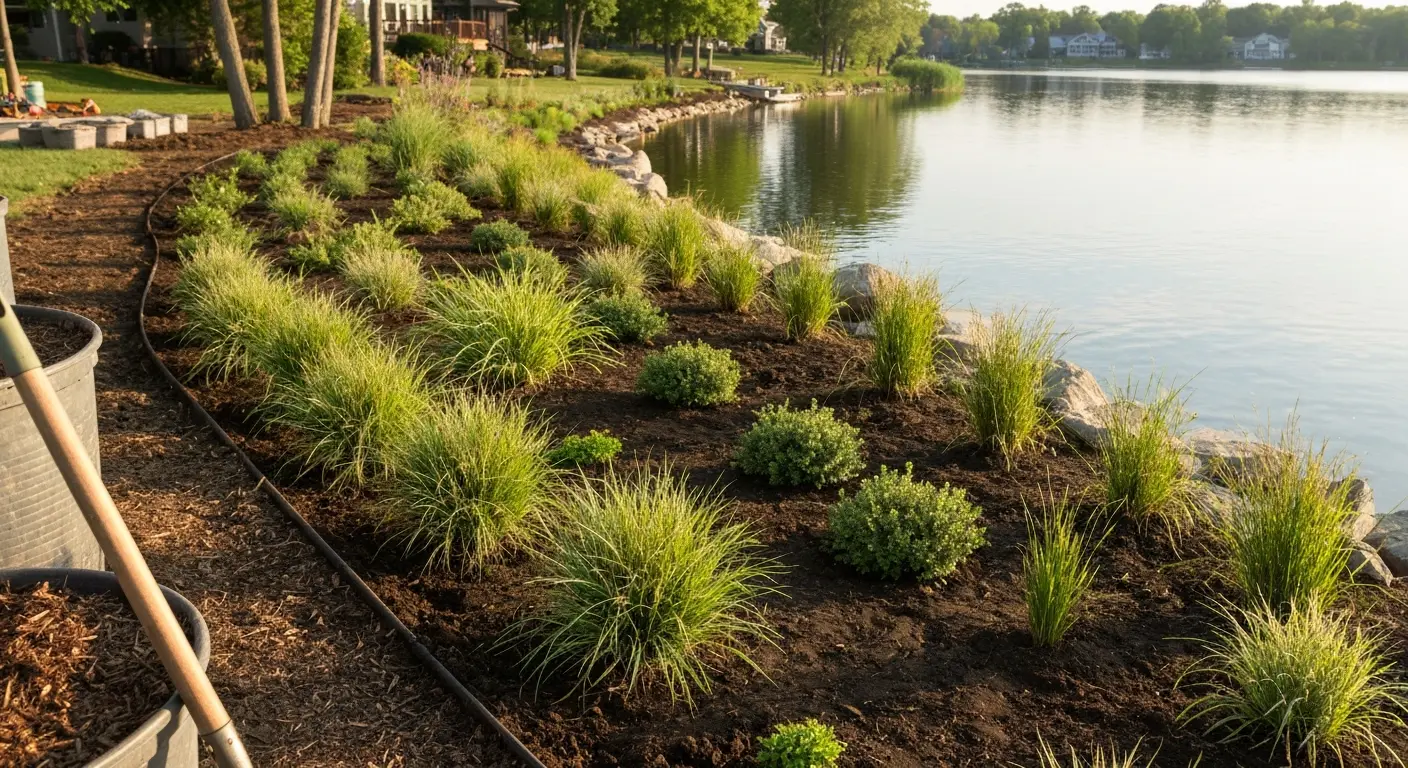
Native vegetation installation along a Brainerd shoreline buffer zone.
Riprap & Rock Stabilization
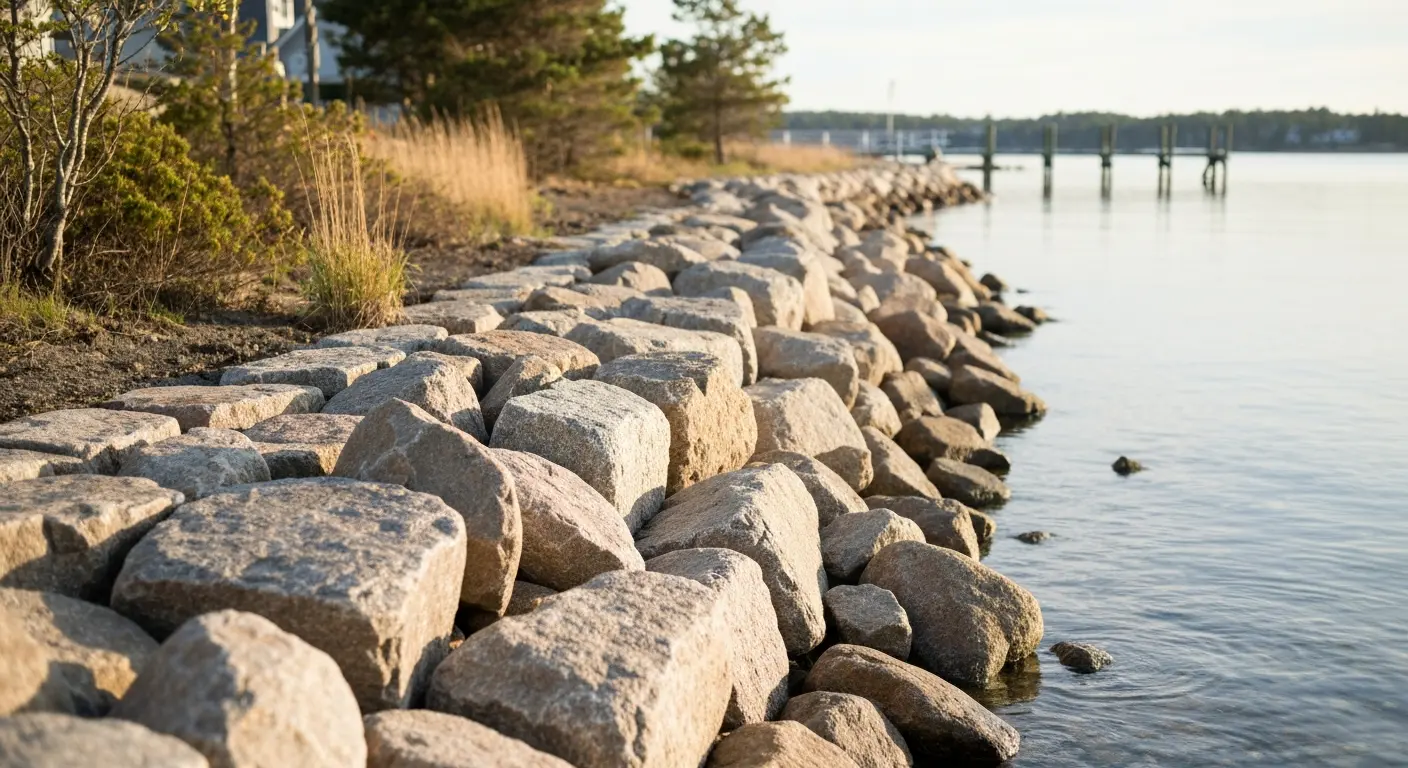
Riprap installation protecting a shoreline from wave action near Baxter.
Layered stone and boulders dissipate wave energy and hold soil in place. Riprap works for steep slopes, high-energy shorelines, and areas with heavy boat traffic.
Crushed or blasted rock locks together better than rounded boulders. Geotextile fabric underneath prevents soil loss through gaps. Popular on Bay Lake and larger chain systems.
Geotextile Fabrics & Erosion Control Mats
Biodegradable geotextile blankets are laid over exposed slopes. Grass seeds planted throughout the mat intertwine with fibers and stabilize the shore.
Low cost and easy installation make them ideal for moderate slopes on residential lots. By the time the mat decomposes (6–10 years), vegetation has taken root. Works well for buffer zones around Serpent Lake and smaller lakes in the region.
Slope Grading & Drainage Management
High bluffs and slopes fail when water pools behind them. We divert runoff away from shorelines and install French drains where needed.
Proper grading reduces erosion and protects foundations. Minnesota freeze-thaw cycles make this crucial for bluff properties in Nisswa, Crosslake, and surrounding areas.
Why It Matters
Shoreline erosion threatens your property value, dock safety, and local ecosystem health.
Protect Property Value & Infrastructure
Untreated erosion leads to foundation damage, dock failure, and loss of usable shoreline. Proactive stabilization preserves your lakefront investment.
Brainerd's high-quality lake properties depend on stable shorelines. Insurance companies often require erosion control measures for coverage.
Support Local Ecosystems & Water Quality
Healthy shorelines filter runoff, provide fish habitat, and stabilize sediment. Native vegetation and living shorelines restore ecological function.
The Gull Lake Chain and surrounding lakes thrive when shorelines are protected. Your stabilization project supports the regional ecosystem that makes Brainerd special.
Serving Brainerd and Surrounding Areas
We work throughout Brainerd and the greater lakes region.
Lake Chains & Popular Shorelines
We stabilize shorelines on Gull Lake, Whitefish Chain, Bay Lake, Serpent Lake, and other major water bodies throughout Crow Wing County and beyond.
Each lake presents unique erosion challenges. Larger chain lakes like Gull and Whitefish experience heavy summer recreation. Smaller lakes near Deerwood and Crosslake often face seasonal runoff issues. We adapt our approach to local conditions.
Residential & Commercial Properties
From lakeside cabins to resort properties, we handle shoreline stabilization for all property types in Brainerd.
Local experience with Minnesota permitting, freeze-thaw cycles, and water-level fluctuations ensures lasting results.
Featured Shoreline Question
What's the best way to stop shoreline erosion in Brainerd?
The best approach depends on your shoreline's slope, water exposure, and soil type. Here are the main options:
- Native vegetation—Low cost, natural look, ideal for moderate slopes on residential lots near Gull Lake and Whitefish Chain.
- Riprap with geotextile—Durable for steep slopes and high wave exposure; works well for commercial properties and busy lakeshores.
- Erosion control blankets—Quick, affordable, and temporary stabilization while plants establish roots.
- Drainage & slope grading—Essential for bluff properties to manage Minnesota freeze-thaw cycles and spring runoff.
We assess your specific site and recommend the solution that balances durability, cost, and environmental impact.
Ready to protect your shoreline? Get a free site assessment.
Frequently Asked Questions
Common questions about shoreline stabilization in Brainerd.
Do I need a permit for shoreline stabilization in Brainerd?
Yes. Minnesota protects all water bodies. Projects involving riprap, docks, or bed alterations require permits from your county SWCD or the Army Corps of Engineers. We handle the application process.
How much does shoreline stabilization cost?
Cost varies by method, site size, and erosion severity. Native vegetation is most affordable; riprap costs more but lasts longer. We provide a site-specific estimate during your consultation.
What's the difference between living shorelines and riprap?
Living shorelines use native plants and natural materials to absorb wave energy; they're better for ecosystems but slower to establish. Riprap is instant protection using large rocks; it's durable but more industrial. Hybrid approaches combine both benefits.
Can I stabilize my shoreline myself?
Simple vegetation planting is DIY-friendly. Complex work—riprap, drainage, bluff grading—requires engineering knowledge and permits. We recommend professional assessment first.
How do I know if my shoreline needs stabilization?
Signs include slumping soil, visible erosion, exposed tree roots, or cracks in foundations. If your dock moves or shoreline visibly shrinks, call for a free inspection.
Does shoreline stabilization improve property value?
Yes. Stable shorelines protect foundations, docks, and usable waterfront. Buyers see erosion control as a sign of well-maintained property. It also satisfies insurance requirements.
DISCOVER WHAT OUR CUSTOMERS HAVE TO SAY ABOUT US
REVIEWS
proudly serving these areas
Brainerd, MN
Baxter, MN
Nisswa, MN
Pequot Lakes, MN
Crosslake, MN
Merrifield, MN
Walker, MN
Little Falls, MN
READY TO take the next step?
get a free quote TODAY!

QUICK LINKS
our services
service areas
operating HOURS
Mon: 7:00 am - 6:00 pm
Tue: 7:00 am - 6:00 pm
Wed: 7:00 am - 6:00 pm
Thu: 7:00 am - 6:00 pm
Fri: 7:00 am - 6:00 pm
Sat: 8:00 am - 12:00 pm
Sun: Closed - Closed